
21 Techniques of Silent Killing
21 Techniques of Silent Killing
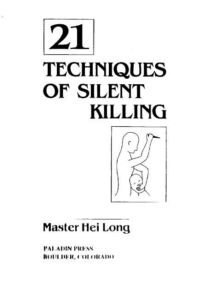
21 Techniques of Silent Killing – Book Overview
Book Title: the title of this book is 21 Techniques of Silent Killing
Author: The author of 21 Techniques of Silent Killing is Master Hei Long (pseudonym)
Published: The published date of 21 Techniques of Silent Killing is 1989.
Publisher: The Publisher of 21 Techniques of Silent Killing is Paladin Press.
21 Techniques of Silent Killing is one of the most controversial titles in underground martial arts literature. Often described as a “forbidden manual,” 21 Techniques of Silent Killing has achieved near-mythical status among collectors, researchers, and pop-culture historians. Rather than promoting sport or self-defense, it explores the darker mythology of stealth, secrecy, and extreme efficiency in combat—making it a product of both fascination and fear.
Author of 21 Techniques of Silent Killing
"Who Was Master Hei Long"?
The identity of Master Hei Long remains unknown. The name itself translates to “Black Dragon,” a symbolic title rather than a verified individual. Most martial arts scholars believe Hei Long was a pseudonym, possibly connected to the legendary Black Dragon Fighting Society, an organization active during the 1960s and 1970s that claimed to teach the “deadliest” combat techniques of the East.
During this period, Western audiences were captivated by stories of ninjas, secret assassins, and shadow warriors. Hei Long’s persona fit perfectly into this cultural moment. Whether he was a single author or a constructed myth, the character of Hei Long became a symbol of hidden knowledge and forbidden mastery.
Publication History and Cultural Context of 21 Techniques of Silent Killing
21 Techniques of Silent Killing was published in 1989 by Paladin Press, a company known for releasing controversial survivalist and combat-related literature. Paladin Press became infamous for printing material that explored extreme topics rarely addressed by mainstream publishers.
The late 1980s marked the peak of the “ninja boom” in movies, magazines, and pulp fiction. 21 Techniques of Silent Killing emerged as a defining artifact of that era—less a training guide and more a reflection of society’s obsession with secrecy, power, and the unseen warrior.
Introduction: What Is 21 Techniques of Silent Killing Really About?
Unlike traditional martial arts books that emphasize discipline, health, or spiritual growth, 21 Techniques of Silent Killing presents combat as a last-resort survival reality. Its tone is direct, cold, and unapologetic, focusing on awareness, positioning, and psychological dominance rather than honor or competition.
The book strips combat down to its most unsettling premise: when survival is at stake, efficiency matters more than fairness. This philosophy is what makes the book both compelling and deeply controversial.
21 Techniques of Silent Killing – Chapter List
The book is divided into 21 concise chapters, each focusing on a concept, tool, or mindset associated with silent combat and stealth operations. The titles alone illustrate why the book gained notoriety:
- The Philosophy of Silent Killing
- Vital Points of the Body
- The Art of Stealth
- The Sentry Removal
- The Knife
- The Garrote
- The Blowgun
- Poison
- The Crossbow
- The Bow and Arrow
- The Handgun (Suppressed)
- The Spike and Needle
- Unarmed Lethal Strikes
- The Sword
- Improvised Weapons
- Environmental Killing
- Chemical Warfare (Small Scale)
- Psychological Warfare
- Disguise and Mimicry
- Escape and Evasion
- The Ultimate Sacrifice
Rather than functioning as a step-by-step manual, the chapters read as conceptual explorations of stealth and vulnerability as imagined in underground martial culture.
Core Themes of 21 Techniques of Silent Killing
1. Efficiency Above All
Hei Long presents combat as something brutal and final, where hesitation leads to failure. The book emphasizes minimizing effort, time, and exposure.
2. Human Fragility
A recurring theme is the idea that human strength is secondary to knowledge, timing, and awareness. The body is portrayed as inherently vulnerable, regardless of size or power.
3. Invisibility and Awareness
Stealth is not just physical silence—it is psychological invisibility. The book repeatedly stresses observation, patience, and environmental awareness.
Summary about 21 Techniques of Silent Killing
- 21 Techniques of Silent Killing walks the line between legend and reality.
- It reveals a world where silence outweighs strength and awareness defines survival.
- The book exposes human vulnerability rather than celebrating violence.
- Its power lies in what it implies, not what it teaches.
Why People Still Read 21 Techniques of Silent Killing
Despite its age and controversy, the book continues to attract attention. Here are five reasons why readers seek it out:
1. Historical and Cultural Curiosity
For many, this book represents a snapshot of 1980s underground culture, when secret martial arts and shadow warfare dominated pop culture.
2. Research for Writers and Creators
Novelists, filmmakers, and game designers use the book as a reference for realism, helping them build believable characters and dark atmospheres.
3. Martial Arts Theory and Anatomy
Some martial artists study the book academically, focusing on its discussion of anatomy, movement, and tactical awareness—without adopting its lethal framing.
4. The Allure of Forbidden Knowledge
Books labeled “banned” or “underground” naturally attract attention. The secrecy surrounding this title only increased its legendary reputation.
5. Threat Awareness and Security Mindset
In security and survivalist circles, understanding extreme material can improve situational awareness, helping people recognize potential dangers rather than replicate them.

The Legacy of Master Hei Long about 21 Techniques of Silent Killing
Today, 21 Techniques of Silent Killing is widely regarded as dangerous if taken literally, exaggerated in parts, and rooted more in myth than verified martial tradition. Many of its concepts are outdated, ethically questionable, and legally problematic.
However, as a cultural artifact, its influence is undeniable. It reflects a time when martial arts were wrapped in mystery, before the internet made information instantly accessible. The legend of the “Black Dragon” persists not because of practical value, but because of imagination.
Final Thoughts about 21 Techniques of Silent Killing
21 Techniques of Silent Killing is not a guide to follow—it is a book to analyze, contextualize, and understand. Its lasting impact comes from how it captures humanity’s fascination with secrecy, power, and the unseen.
Master Hei Long may be a phantom, but his book remains a haunting reminder of an era when shadows felt deeper, and forbidden knowledge carried real weight.