
Khol Ankh Zameen Dekh
Khol Ankh Zameen Dekh
1. About the Author & Publication Date
- Publication Date:The travelogue “Khol Ankh Zameen Dekh“ by Abu Yahya was first published in 2014.
Abu Yahya is the pen name of a contemporary Pakistani author, scholar, and intellectual, renowned for his writings that seamlessly blend modern ethical philosophy with Islamic teachings. He is a prominent figure in modern Islamic literature, focusing on the importance of personal character development, purpose-driven living, and connecting moral principles to everyday life. Unlike traditional religious scholars, Abu Yahya utilizes accessible storytelling, allegories, and travel narratives to convey profound spiritual and moral lessons.
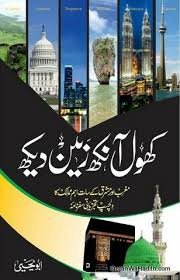
- Khol Ankh Zameen Dekh is a travelogue by the famous writer Abu Yahya which covers seven countries of the East and West.
- An in-depth study of the lifestyles in the U.S. and Canada.
- Focus on Saudi Arabia and the Holy Lands, specifically Mecca and Medina.
- Examining the lives in Sri Lanka, Thailand, Malaysia, and Singapore.
- The contrasting of countries in the East with those in the West, and an emphasis on the intellectual and scientific leadership of Islam.
- An impartial assessment of the flaws of Western civilization and the virtues of the Western system
- Extensive and beautiful scenery of the most important landmarks of seven countries.
- Abu Yahya’s intellectually stimulating book, framed within the travelogue format.
A) The Author's Philosophical Stance
• Ethical and Spiritual Reflection:
Abu Yahya’s core philosophy centers on the idea that the universe (the “Zameen” or Earth) is filled with signs (ayat) that point towards God and universal moral truths. The act of travel is, therefore, a spiritual duty—a means to reflect on the rise and fall of civilizations, the nature of human existence, and the consistency of divine law.
• The Command to See:
The title, “Open Your Eyes, See the Earth,” is viewed as a direct instruction to engage with the world critically. The author encourages readers to move beyond superficial sight (just seeing buildings and landscapes) to profound observation (seeing the hidden laws and historical lessons embedded within the physical world).
B) The Context of the Book
This travelogue is a cornerstone of Abu Yahya’s work, providing a modern, pragmatic approach to spiritual growth. It seeks to answer complex moral and existential questions by examining the lifestyles, ethics, and historical achievements of different nations, often contrasting the scientific and material success of the West with its perceived spiritual vacuum.
2. Book Structure and Conceptual Chapter List
The book is structured geographically, covering the author’s travels across various continents. Each location serves as a thematic backdrop for specific moral or philosophical lessons, making the chapters feel like reflective essays rather than mere descriptions of sights.
Part | Conceptual Focus | Thematic Chapter Examples | Pillar of Moral Reflection |
I | The Purpose of the Journey | The Divine Command to Travel and Reflect; The Difference Between Sight and Insight; Preparing the Heart and Mind for Travel; The Initial Shock of Cultural Contrast. | Intention: Establishing the spiritual objective behind physical travel. |
II | Reflections from Developed Nations | Analyzing the Discipline and Work Ethic of European Societies; The Secret to Western Innovation and Scientific Progress; The Role of Law and Justice in Building a Nation; The Paradox of Material Abundance and Emotional Loneliness. | Societal Ethics: Extracting lessons on organizational structure, justice, and community discipline. |
III | Lessons from Historical Sites | Visiting the Ruins of Past Empires (The Lesson of Mortality and History); Analyzing the Causes of Civilizational Decline; The Transience of Power and Glory; The Universal Nature of Punishment and Reward. | Historical Wisdom: Linking historical events to universal moral laws and destiny. |
IV | The Inner Map (The Self and the World) | The Concept of Ihsan (Excellence) in Daily Life; Dealing with Disappointment and Unfulfilled Expectations; The Necessity of Moral Courage and Responsibility; Finding Spiritual Peace Amidst Global Chaos. | Self-Correction: Applying global observations to personal character development. |
V | Conclusion: The Return to the Essence | The Synthesis of Global Experience and Faith; The Continuous Nature of Moral Struggle; The Role of the Individual in Societal Reform; True Meaning of Home and Belonging. | Integration: Bringing the lessons learned back into one’s daily routine and homeland. |
3. Summary
This philosophical travelogue is the covert handbook for interpreting the world as a divine scripture, whispering that true journeying is the act of reading the moral destiny etched into the ruins of every great civilization. It decodes the fundamental secret that the universe is not chaos but a perfectly ordered ethical system, revealing that profound sight begins when the traveller seeks the lesson in the landscape rather than just the beautiful view. The enduring enigma it solves is that the rise and fall of all nations are governed by the same simple laws of character and justice.
4. Reasons People Should Read This Book
“Khol Ankh Zameen Dekh” is a highly recommended read, especially for those seeking to integrate faith, ethics, and modern life. It transcends the typical travelogue genre to offer a profound moral education.
1. It Provides a Framework for Ethical Travel
The book teaches readers how to move beyond being a mere tourist to becoming a moral observer. Abu Yahya explicitly outlines how to extract ethical lessons from different societies, compelling the reader to evaluate which principles lead to societal success (e.g., punctuality, justice, hard work) and which lead to decline (e.g., corruption, moral decay), regardless of religious affiliation.
2. Encourages Historical and Civilizational Reflection
A major theme is the study of history as a guide to the future. By visiting historical sites—both of past Muslim and Western powers—the author encourages a deep reflection on the universal laws governing civilizations. This perspective helps the reader understand their own role in the historical continuum and the cyclical nature of human endeavor.
3. Seamlessly Blends Spiritual Philosophy with Modern Life
Abu Yahya’s narrative style connects spiritual and philosophical concepts (like purpose, destiny, and accountability) directly to contemporary issues. His observations make abstract Islamic or ethical ideas practical, showing how virtues like honesty and discipline are not just religious obligations but are also prerequisites for national and personal success in the modern world.
4. Offers a Balanced and Critical Global Perspective
The author provides an honest critique of both the flaws within Muslim societies and the spiritual shortcomings found in highly developed Western nations. This balanced viewpoint challenges readers to avoid cultural extremes, encouraging them to adopt the best universal practices (e.g., efficiency, adherence to law) while preserving moral integrity.
5. Serves as a Tool for Personal Accountability and Growth
Ultimately, the book directs the global journey inward. Every external observation is used to prompt the reader towards self-correction and personal reform. The message is clear: the condition of the individual is a reflection of the condition of the society. Reading the book encourages readers to take responsibility for their own moral development as the first step toward effecting positive change in their community.