
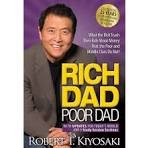
Rich Dad Poor Dad
Rich Dad Poor Dad
1. About the Authors & Publication Date
Introduction: The Two Dads
The book Rich Dad Poor Dad is structured as a series of personal anecdotes and lessons comparing the mindset of two father figures:
- The “Poor Dad”: The author’s biological father—highly educated (a Ph.D.) and a hard worker who emphasized job security, academic success, and following the traditional path. He constantly struggled financially.
- The “Rich Dad”: The father of the author’s best friend—an entrepreneur who was not formally educated but became one of the wealthiest men in Hawaii. He emphasized financial literacy, investing, and having money work for you.
Kiyosaki chose to follow the advice of his “Rich Dad,” leading him to financial independence.
Author
The book was written by Robert T. Kiyosaki with Sharon L. Lechter.
- Robert Kiyosaki: An American investor, businessman, and self-help author, known for founding the Rich Dad Company. He has built a financial education franchise around the principles laid out in this book.
- Publication Date: The book was first self-published in 1997 before being picked up commercially and becoming a global bestseller.
A) The Authors' Core Philosophy
- The Cashflow Quadrant: The book’s philosophy centers on the idea that financial freedom is achieved not through high income, but by shifting from the Employee (E) and Self-Employed (S) quadrants to the Business Owner (B) and Investor (I)
- The Importance of Assets: The core lesson is the distinction between assets (things that put money in your pocket) and liabilities (things that take money out of your pocket). Kiyosaki argues that the middle class buys liabilities they think are assets (like a personal residence or an expensive car), while the rich acquire income-generating assets.
B) The Context of the Book
“Rich Dad Poor Dad” emerged as a counter-narrative to traditional financial advice in the late 1990s, challenging the “go to school, get a good job, save money” mantra. It advocates for financial literacy as the true basis of wealth, urging readers to take calculated risks, understand taxes, and make money work for them.
2. Book Structure and Conceptual Chapter List
The book is structured as a series of lessons, each detailing a specific aspect of the “Rich Dad’s” philosophy, contrasting it sharply with the traditional advice of the “Poor Dad.”
Lesson No. | Conceptual Focus | Thematic Chapter Examples | Pillar of Financial Education |
Lesson 1 | The Rich Don’t Work for Money | How Fear and Greed Control the Poor and Middle Class; The Trap of the “Rat Race”; Financial Independence vs. Job Security. | Mindset Shift: Changing the core motivation for work. |
Lesson 2 | The Importance of Financial Literacy | The Difference Between an Asset and a Liability; ; Understanding the Income Statement and Balance Sheet. | Technical Knowledge: Learning the language of money. |
Lesson 3 | Mind Your Own Business | Focusing on Building the Asset Column; The Danger of Relying Solely on a Paycheck; Investing in Real Estate and Stocks Outside of Your Job. | Action Plan: Building income-generating portfolios. |
Lesson 4 | The History of Taxes and Corporations | The Rich Know How to Use Taxes to Their Advantage; The Role of Corporations in Protecting Assets; Minimizing Tax Liability Legally. | System Awareness: Understanding how tax laws favor investors. |
Lesson 5 | The Rich Invent Money | Overcoming Risk Aversion; Developing Financial Creativity; The Ability to Find Opportunities Others Miss; The Value of Negotiation Skills. | Creativity: Developing the skills to find, secure, and grow deals. |
Lesson 6 | Work to Learn—Don’t Work for Money | Focusing on Skills Like Sales, Marketing, and Communication; Learning to Manage Cash Flow, Systems, and People. | Skill Development: Acquiring transferable business skills over job tenure. |
3. Summary
This financial primer is a covert map detailing the mental labyrinth of generational wealth, whispering that the fear of losing money is the true poverty. It deciphers the coded message that the rich build income-generating structures while the middle class purchases consuming debts, revealing that the school system intentionally blinds its students to the mechanisms of capital and taxation. The enduring enigma it solves is that financial freedom is not measured by salary size, but by the number of days you can survive without working.
4. Reasons People Should Read This Book
“Rich Dad Poor Dad” became a global phenomenon because it provides a paradigm-shifting perspective on money and wealth, forcing readers to question conventional wisdom.
1. It Radically Changes the Definition of Assets and Liabilities
The single most powerful takeaway is Kiyosaki’s clear, simple distinction between assets and liabilities. The book forces readers to critically evaluate their possessions. This fundamental re-education exposes how traditional middle-class purchases (like large homes with mortgages and consumer debt) are often financial traps, not wealth builders.
2. Motivates Financial Literacy as the "New Education"
Kiyosaki argues vehemently that formal education prepares people to be good employees, but financial literacy is required to be an owner. The book strongly encourages readers to take responsibility for their own financial education—learning accounting, investing, markets, and law—rather than delegating that knowledge to advisors.
3. Challenges the Security of Traditional Employment
The book directly confronts the notion of “job security,” which it labels as a fear-based concept embraced by the “Poor Dad.” By presenting the Cashflow Quadrant, it motivates readers to stop trading time for money and instead focus on building systems (B) and passive investments (I) that provide true financial independence and protection against economic instability.
4. Demystifies the Role of Debt and Taxes in Wealth Building
Kiyosaki uniquely positions debt and taxes not as simple burdens, but as tools utilized effectively by the rich. The book explains how corporations and tax laws are structured to reward investors and business owners, encouraging the reader to understand the legal framework of money and learn how to use “good debt” (debt that buys income-generating assets) to accelerate wealth.
5. Provides a Blueprint for Overcoming Mental Obstacles
A significant portion of the book addresses the psychological barriers to wealth: fear, cynicism, laziness, and bad habits. Kiyosaki uses anecdotes to show how fear of losing money prevents people from investing, and how cynicism (criticizing ideas instead of analyzing them) closes the door on opportunity. This focus on mental and emotional intelligence is crucial for long-term financial success.