
Blink
Blink
1. Blink The Author and Publication Details
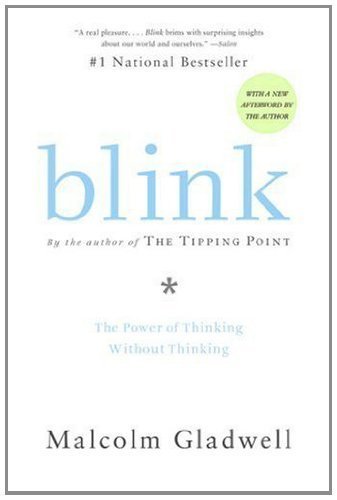
Author: The Aurthor of Blink is Malcolm Gladwell
Book Title: Blink: The Power of Thinking Without Thinking
First Published: Blink was published on January 11, 2005
Publisher: The publisher of blink is Little, Brown and Company
- Malcolm Gladwell the author of Blink is a Canadian journalist, author, and public intellectual best known for transforming complex social science and psychological research into engaging narratives for general readers. Before Blink, Gladwell gained international fame with The Tipping Point, and later went on to write other influential works such as Outliers, David and Goliath, and Talking to Strangers. His writing style combines storytelling with research, making abstract ideas accessible and memorable.
- Blink quickly became an international bestseller and sparked widespread discussion about intuition, decision-making, and the unconscious mind. Gladwell’s goal in this book is not to reject logic, but to help readers understand the powerful mental processes that operate beneath conscious thought.

2. Introduction to Blink
At some point in life, almost everyone has experienced a strong feeling that something is right or wrong without being able to explain why. Blink is a book that explains what lies behind that feeling. It explores how people often make decisions in seconds — decisions that feel automatic, instinctive, and effortless — yet are shaped by years of experience and hidden mental processes.
Gladwell introduces the idea that humans think on two levels: the conscious mind, which is slow and deliberate, and the adaptive unconscious, which works rapidly and silently. The book focuses on how this unconscious system helps us make quick judgments, sometimes with incredible accuracy and sometimes with disastrous consequences.
3. Central Idea of Blink: Thin-Slicing
Although Blink is not divided into traditional numbered chapters, it is generally organized around the following main sections:
- The Statue That Didn’t Look Right
- The Locked Door: The Secret Life of Snap Decisions
- The Warren Harding Error
- Paul Van Riper’s Big Victory
- Kenna’s Dilemma
- Seven Seconds in the Bronx
- Listening With Your Eyes
- Blinking and Blindness
- Conclusion: The Power of Thinking Without Thinking
Each chapter presents real-life stories and research examples that illustrate how thin-slicing works and where it can fail.
4. Central Idea of Blink: Thin-Slicing
The core concept of Blink is thin-slicing, which means making sense of a situation using very little information. According to Gladwell, the human brain has an extraordinary ability to focus on the most meaningful details in a short moment and ignore the rest. This allows experts to make accurate decisions quickly.
For example, an experienced art expert can look at a sculpture for a few seconds and sense that it is fake, even before identifying technical flaws. Similarly, a psychologist like John Gottman can predict whether a marriage will last after observing a couple for just a few minutes. These abilities are not magical; they are the result of training, experience, and deep familiarity with patterns.
5. When Snap Judgments Work in Blink
Gladwell provides many examples showing that fast thinking can be extremely effective:
- Marital predictions: John Gottman can predict divorce with high accuracy after observing short conversations between couples.
- Sports intuition: Tennis coaches often sense when a player will double-fault before it happens.
- Art authentication: Antiquities experts recognize fake artifacts instantly, without conscious reasoning.
These examples show that the unconscious mind can process complex information more efficiently than slow, analytical thinking when it is properly trained.
6. When Snap Judgments Fail in Blink
However, Blink also warns that thin-slicing is not always reliable. When unconscious judgments are influenced by fear, stress, or bias, the results can be tragic. Gladwell discusses several major failures of rapid cognition:
One powerful example is the election of Warren G. Harding, where voters and political leaders were influenced by his appearance rather than his competence. Another is the failure of New Coke, where companies ignored emotional attachment in favor of rational analysis. The most disturbing case is the shooting of Amadou Diallo, where police officers made a fatal snap judgment influenced by panic and racial bias.
These stories highlight how unconscious prejudice can distort perception and decision-making.
7. The Role of Bias and Emotion in Blink
A major strength of Blink is its discussion of implicit bias. Gladwell explains that people can act on prejudice even when they consciously reject it. Through concepts like psychological priming and the Implicit Association Test, the book shows how deeply ingrained biases influence our behavior.
Gladwell emphasizes that intuition is shaped by culture, environment, and past experiences. Therefore, improving decision-making requires training the unconscious, not blindly trusting it.
8. Information Overload and Analysis Paralysis in Blink
Another key argument in Blink is that having too much information can actually harm decision-making. Gladwell introduces the idea of analysis paralysis, where excessive data prevents clear judgment. In many cases, experts make better decisions with limited information because they focus only on what truly matters.
The book encourages simplicity and clarity, suggesting that better decisions often come from recognizing patterns rather than collecting endless details.
9. Blink Summary
- Blink explores the silent moments where decisions are born before words exist.
- It reveals a hidden intelligence that acts faster than reason and deeper than logic.
- In a single instant, the mind can reveal truth — or fall into illusion.
- To understand thinking, one must first understand the power of not thinking.
10. Five Reasons Why People Should Read Blink
1. To Understand How the Mind Really Works in Blink
Blink explains how unconscious thought influences everyday decisions.
2. To Improve Decision-Making Skills Through Blink
Readers learn when to trust instincts and when to slow down.
3. To Recognize Hidden Biases with Blink
Blink helps readers become aware of unconscious prejudice.
4. To Avoid Overthinking from Blink
Blink shows why simplicity can lead to better judgments.
5. To Apply Psychology to Real Life Using Blink
The ideas are relevant to relationships, careers, leadership, and daily choices.