
The 48 Laws Of Power Book Review
The 48 Laws Of Power
About the Author: Robert Greene
The author of “The 48 Laws of Power“ is Robert Greene, an American author whose work primarily revolves around the themes of power, strategy, and human psychology.
A) Educational Background and Professional Journey
Robert Greene received his education at Cambridge and worked in various professions, including as a magazine editor, a writer in Hollywood, and a translator. These diverse experiences provided him with a unique and practical insight into human character, motivations, and the politics of power. He was particularly interested in understanding how people influence each other and how major players in history achieved success or met their downfall.
B) The Book’s Source and Influence
“The 48 Laws of Power” is Greene’s first and most famous book. It was developed in collaboration with Joost Elffers, who gave it its distinct, attractive design. The book is the result of Robert Greene’s extensive research spanning 3,000 years of history, during which he studied the lives of philosophers, politicians, and military leaders from various periods, including Niccolò Machiavelli, Sun Tzu, Carl von Clausewitz, and the Mughal courts. From their actions, he distilled the laws of power.
C) Writing Style and Philosophy
Greene’s writing style is direct, unemotional, and sometimes ruthless. He does not impose any moral judgment but makes it clear that we must understand the world as it is, not as we wish it to be. According to him, these laws are used constantly in social interactions, whether you are aware of them or not. His philosophy is that knowing these laws, whether you choose to use them or not, is essential for self-defense and for better understanding situations.
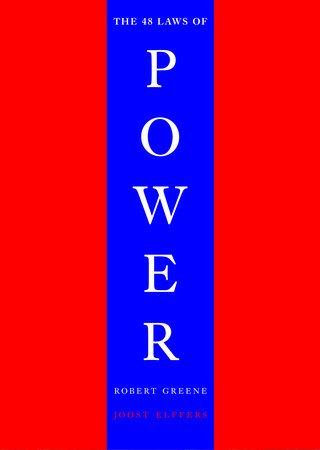
Table of Contents
“The 48 Laws of Power” is not a traditional novel or textbook; rather, it is a compilation of 48 individual and emotionally detached laws. Each law is presented as a specific chapter, explained with concrete historical examples of how it was successfully used, and sometimes, what happened when it was ignored:
Law Number | Core Idea | The Law’s Primary Purpose |
Law 1 | Never Outshine the Master. | To secure your position and respect the Ego of your superior. |
Law 3 | Conceal Your Intentions. | To create uncertainty and fear so the opposition cannot predict your next move. |
Law 6 | Court Attention at All Cost. | To make yourself memorable and important in the eyes of others. |
Law 9 | Win Through Actions, Never Argument. | To prove that actions and results are more powerful than mere talk. |
Law 15 | Crush Your Enemy Totally. | To prevent the enemy from ever rising again and to solidify your rule. |
Law 18 | Do Not Build Fortresses to Protect Yourself; Isolation is Dangerous. | To maintain social connections to gather intelligence and anticipate threats. |
Law 28 | Enter Action with Boldness. | To display confidence and conviction in your actions, as doubt weakens your power. |
Law 33 | Discover Each Man’s Thumbscrew (Leverage). | To know people’s hidden weaknesses so they can be used for your advantage. |
Law 44 | Disarm and Infuriate with the Mirror Effect. | To confuse your opponent by imitating their actions and methods. |
Law 48 | Assume Formlessness. | Not adhering to any single predictable pattern so you cannot be easily understood or anticipated. |
- (Similarly, the book includes 48 laws, each illuminating a different aspect of human interaction and strategy.)
Summary
This book is the secret code of conduct for history’s most powerful players. It reveals that success requires not just good intentions, but an understanding of how people navigate the world with cunning, deception, and acuity. Its central secret is that you either participate in the game by understanding the Laws of Power or become a victim of these laws through ignorance. It provides you with a cold, unemotional insight that enables you to understand the invisible psychological battles happening around you and protect yourself.
Reasons People Should Read This Book
Here are five solid reasons to read this controversial yet popular book, making it essential for understanding:
Understanding Human Psychology
The book deeply analyzes the fundamental human motivators such as greed, ego, fear, and insecurity. Robert Greene’s laws are based on historical evidence of how people flock to the powerful and overlook the weak. Reading this book helps you understand what people are truly thinking beneath the surface, allowing you to make better decisions in your professional and personal relationships.
Defensive Strategy and Self-Protection
Although the book teaches laws for acquiring power, many read it primarily for self-defense. It helps you recognize the tactics and maneuvers that others might be using against you. Once you understand these laws, you can neutralize their attacks and protect yourself from harm. This ultimately enhances your Social Intelligence.
Historical and Cultural Insight
To explain each law, Robert Greene draws examples from different periods of history, cultures, and geographical regions. The book brings together the principles of Napoleon Bonaparte, Chinese courtiers, Queen Elizabeth I, and Machiavelli. It offers an opportunity to view history through the lens of a power game and significantly enhances your historical knowledge.
Unemotional Decision Making
The book teaches that if you want to succeed, you must separate your emotions from your decision-making. Robert Greene’s instructions promote a clinical and strategic perspective. It stresses acting based on logic and long-term consequences rather than fear or sympathy, which is crucial for success, especially in business and politics.
Improving Strategic Thinking
“The 48 Laws of Power” are not just mandates but a collection of flexible strategies. They train the reader on how to align their actions and decisions under a powerful overarching strategy. For example, Law 48 (Be Formless) teaches you to always be ready for change and avoid becoming a predictable target. It trains your mind like an agile and strategic combatant.